
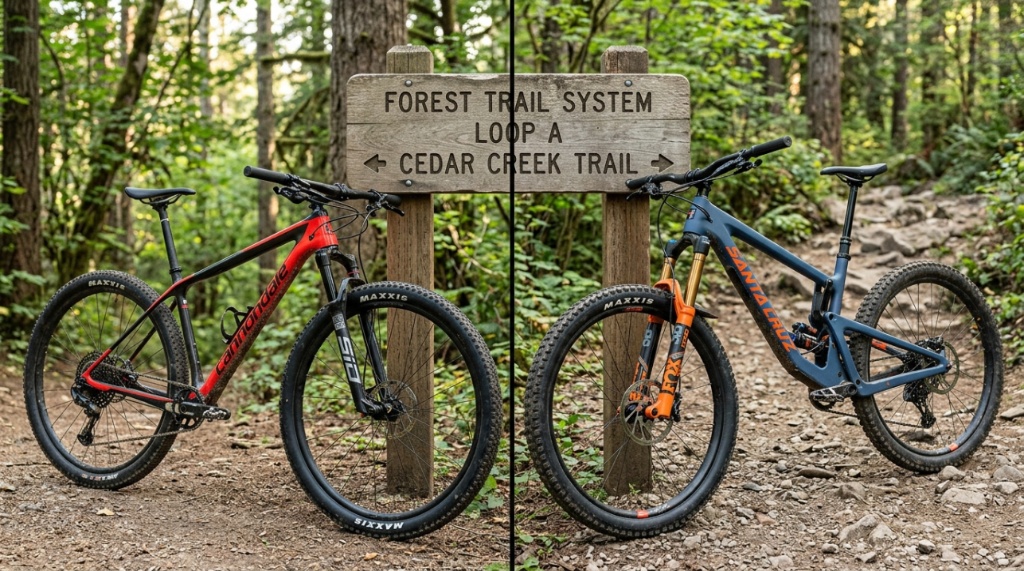
Choose a Short Travel Trail Bike if you ride smoother or rolling trails and want a lively, efficient feel; choose long travel if your trails are consistently rough, steep, and fast enough that extra forgiveness and traction improve control. This Trail Bike Comparison is designed to satisfy search intent quickly: every heading is a question, and every section starts with a snippet-ready answer.
The travel debate gets people stuck because “more travel” sounds safer. But more travel also changes the ride: the bike may feel heavier, less direct on climbs, and less playful on mellow trails. The goal isn’t to buy the most capable bike—it’s to buy the bike that feels best on the trails you ride most. This guide helps you decide using real conditions, not internet hype.
What is a short travel trail bike?
Direct answer: A short travel trail bike is a trail bike with less suspension travel designed to feel efficient, responsive, and lively on climbs and smoother trails.
Short travel doesn’t mean “weak.” It means the bike is optimized to maintain speed and feel energetic, often with modern geometry that still handles real trail features.
What is a long travel trail bike?
Direct answer: A long travel trail bike has more suspension travel to absorb bigger hits and repeated roughness, offering more comfort and control on descents.
Long travel becomes valuable when descents are long and choppy or when you hit bigger features frequently.
How do you choose travel based on your local trails?
Direct answer: Choose based on the roughest trails you ride weekly, not the hardest trail you might try once a year.
- Smooth hardpack + rolling singletrack: Short travel usually feels better.
- Mixed trails with some chunk: Either can work; your style and fatigue tolerance decide.
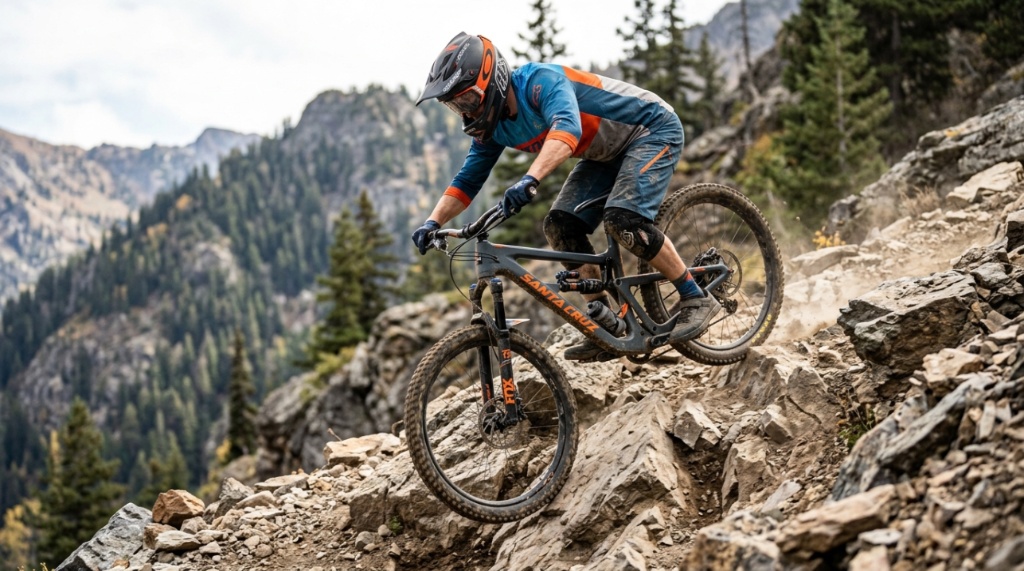
- Rocky, steep, fast descents: Long travel becomes more valuable.
People also ask: Is short travel enough for trail riding?
Direct answer: Yes—many riders do most trails on short travel bikes, especially with good tires and correct suspension setup.
How does travel affect climbing efficiency?
Direct answer: Short travel generally feels more efficient and direct, while long travel can climb well but is more sensitive to setup and weight.
Climbing isn’t just weight. It’s also pedaling support and traction. On rough climbs, long travel can maintain traction, but on smooth climbs, short travel often feels snappier.
How does travel affect descending confidence?
Direct answer: Long travel increases forgiveness and control on repeated impacts; short travel can still descend confidently on moderate terrain with good technique and tires.
Descending confidence is also about brakes and tire grip. If your tires slide or your brakes fade, travel won’t fix the root issue.
What’s the biggest difference in day-to-day ride feel?
Direct answer: Short travel feels playful and quick to accelerate; long travel feels calmer and more comfortable when the trail gets rough.
If you ride the same local loop multiple times per week, ride feel matters more than maximum capability. A bike that feels fun on ordinary days is often the best long-term choice.
How do you compare short travel and long travel trail bikes quickly?
Direct answer: Use a simple trail bike comparison grid: your terrain, your speed, your fatigue level, and how often you ride rough descents.
| Question | Short travel tends to win if… | Long travel tends to win if… |
|---|---|---|
| What do you ride most? | Smooth/rolling trails, lots of pedaling, shorter descents | Rough, steep descents and repeated impacts |
| What do you value most? | Playful feel, quick acceleration, efficiency | Comfort, stability, forgiveness at speed |
| How often do you ride big descents? | Rarely or occasionally | Weekly or most rides |
| How sensitive are you to maintenance cost? | Prefer lower cost and simplicity | Okay with more service for more capability |
| What’s your riding style? | Flow, cornering, pumping terrain | Charge through chunk, bigger hits |
What setup makes short travel feel more capable?
Direct answer: Grip-focused tires, correct pressure, and a supportive suspension tune make short travel bikes feel far more capable on rough sections.
- Choose tires with good side knobs for cornering
- Run sensible pressures to increase traction without squirm
- Set sag correctly and avoid overly fast rebound
People also ask: Can a short travel bike handle bike-park trails?
Direct answer: Sometimes, but it’s not ideal for repeated big impacts; long travel is better if bike-park riding is a regular habit.
What setup makes long travel feel less sluggish?
Direct answer: Slightly firmer support, efficient tires, and proper damping help long travel bikes pedal better without losing descending control.
A common mistake is running long travel too soft. That can feel comfortable at first but wastes energy and reduces precision in corners.
Which should you choose for “one bike” trail riding?
Direct answer: Most riders choose short-to-mid travel for a true all-rounder, and long travel only if their local trails are consistently rough or their style is aggressive.
If your trails are mixed and you ride often, an all-round trail bike that pedals well tends to get used more. If your trails are rough and fast, long travel can make riding safer and less exhausting.
Conclusion: Short travel or long travel trail bike?
Direct answer: Short travel wins for efficiency and everyday fun; long travel wins for rough descents and comfort—choose based on what you ride weekly.
If you tell me your trail type (hardpack, loose, rocky), average ride length, and whether you prioritize climbing speed or descending comfort, I can tell you which side of the comparison you’ll likely enjoy more.
While aggressive riders often debate suspension metrics, comfort and accessibility dictate choices for other cycling niches. For instance, riders prioritizing easy mounting and stability over rugged trail performance might find better utility in a specialized Step-Through Electric Bike For Seniors, which bridges the gap between mechanical assistance and physical comfort.
FAQ
Is a short travel trail bike good for beginners?
Direct answer: Yes—short travel bikes are often efficient and easy to handle, making them a great choice for many beginners on typical trails.
Is long travel safer?
Direct answer: It can be more forgiving on rough descents, but safety still depends on brakes, tires, and rider skill.
What matters more than travel?
Direct answer: Fit, tires, brakes, and suspension setup often matter more than travel numbers for real trail performance.
Should I choose short travel for long trail days?
Direct answer: If your long days include lots of pedaling and moderate descents, short travel often feels better and less tiring.
Can tires make a short travel bike feel like a long travel bike?
Direct answer: Tires and setup can improve comfort and traction, but they won’t fully replicate the forgiveness of extra suspension travel on big hits.
Does wheel size change the decision?
Direct answer: It can—larger wheels improve rollover, but the travel decision still depends on terrain roughness and desired ride feel.
Is a mid-travel trail bike the best compromise?
Direct answer: For many riders, yes—mid-travel often balances efficiency and capability well for mixed trails.


