No two surfers have the same space — a studio apartment in Miami Beach, a suburban garage in Jacksonville, a beachfront condo in Cocoa Beach, and a family home in Tampa all demand completely different surfboard storage solutions. The mistake most surfers make is choosing storage based on what looks good on Instagram rather than what actually fits their specific space constraints, access patterns, and living situation. The right home surfboard storage matches the solution to the space — not the other way around. A beautiful wall-mounted display is useless in a rental where you can’t drill holes. A garage ceiling hoist is irrelevant for a surfer in a third-floor apartment. Start with your space’s reality, then find the storage that works within it.
The surfboard storage market has expanded dramatically, offering solutions for virtually every space scenario — from under-bed storage for studio apartments to multi-board garage systems for serious quivers. But this variety creates decision paralysis when you don’t have a framework for choosing. The right framework starts with three questions: What space do I actually have? How often do I access my boards? And what constraints exist (rental rules, shared spaces, climate)? Answer these, and the right storage solution becomes obvious. Here’s the complete guide to choosing surfboard storage solutions matched to your specific space.
What Factors Determine the Right Storage Solution for Your Space?
The right storage depends on available space type (wall, floor, ceiling, outdoor), access frequency (daily vs. seasonal), housing situation (own vs. rent), climate (heat/humidity exposure), and board collection size — these five factors narrow your options to the ideal solution.
Decision framework:
| Factor | Options It Eliminates | Options It Favors |
|---|---|---|
| Renting (can’t drill) | Wall mounts, ceiling hoists | Freestanding, tension-pole, door-mounted |
| Small space (apartment) | Large freestanding racks | Wall-mounted vertical, ceiling, over-door |
| Daily board access | Ceiling hoists, high storage | Floor stands, accessible wall racks |
| Hot climate (Florida) | Outdoor exposed, hot garage ceiling | Indoor, insulated spaces, board bags |
| Multiple boards (4+) | Single-board stands | Multi-board wall systems, garage racks |
What’s the Best Storage for Small Apartments?
For small apartments, vertical wall-mounted racks, over-door hooks, under-bed storage (for shortboards in board bags), and ceiling-mounted hoists maximize storage while using zero livable floor space.
Small apartment solutions:
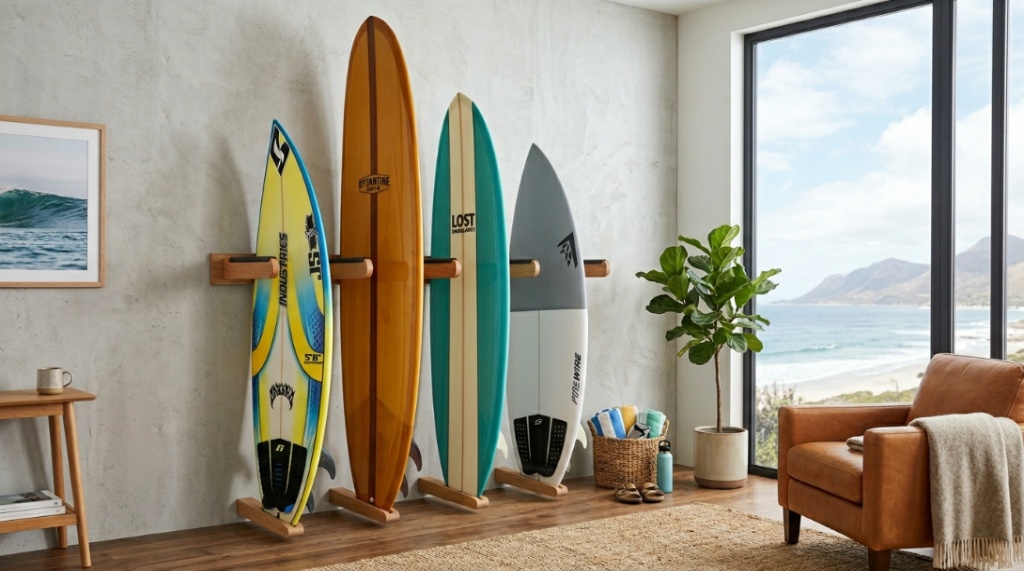
- Vertical wall mount: Board mounts nose-up on the wall, using 1–2 sq ft of wall and zero floor space. Works if you can mount (own or landlord allows small holes).
- Over-door hook/hanger: Hooks over a door frame. Zero installation, zero holes. Holds a single board in otherwise wasted door space. Best for renters.
- Behind-door storage: Board stands vertically behind an opened door against the wall. Hidden when door is open. Clever use of dead space.
- Under-bed: Shortboards in thin board bags can slide under beds with 6″+ clearance. Completely hidden. Not for daily-use boards (inconvenient access).
- Ceiling corner hoist: Pulley system lifting the board to the ceiling corner. Uses completely dead space above head height.
The principle for small apartments: think vertically and think about dead space. The best storage uses space you’re not using for anything else — high walls, ceilings, door backs, under furniture.

What’s the Best Storage for a Garage?
For garages, wall-mounted horizontal racks are the standard — they use dead wall space above car height, hold multiple boards, and keep boards accessible while protecting from falls. Supplement with ceiling hoists for overflow boards.
Garage storage priorities:
- Wall-mounted horizontal racks (primary): Mount above car-hood height on the wall. Holds 2–6 boards. Easy access. The garage storage standard.
- Ceiling hoists (overflow): For boards used less frequently. Lifts boards to ceiling, freeing all wall and floor space. Good for seasonal boards.
- Freestanding corner rack: For surfers who don’t want to mount anything. Uses a garage corner efficiently. Holds 3–6 boards vertically.
- Heat protection (Florida-specific): Mount on interior (shared house) walls, use board bags, insulate if possible. Garage heat is the #1 Florida surfboard enemy.
Garage layout tip: mount racks on the wall opposite your car parking side so you never hit boards with car doors. If space is tight, mount above car-hood height so boards and car coexist on the same wall. Leave the garage floor completely clear for parking and work.
What’s the Best Storage for Condos and Shared Spaces?
For condos and shared spaces, aesthetic-focused solutions (furniture-quality stands, display mounts) and portable options (freestanding racks that move to accommodate other activities) work best — storage that looks intentional, not messy.
Condo/shared space strategies:
- Furniture-grade floor stand: A quality bamboo or hardwood stand displays the board as décor, not clutter. Partners and roommates accept attractive displays.
- Wall art mounting: Board mounted on the wall as intentional art/décor. Looks designed rather than stored. Popular in modern condos.
- Closet/utility room: If you have storage space, a simple rack inside a closet keeps boards out of living areas entirely. Use with board bags.
- Balcony/lanai storage: Covered balconies work for board storage if shaded from direct sun. Use board bags and vertical racks. Keep out of wind.
- Building storage unit: Many condos offer storage cages. A simple wall mount or freestanding rack inside your unit works. Climate concerns apply.
How Do You Choose Storage Based on Access Frequency?
Daily-use boards need quick-grab accessible storage (floor stands, low wall mounts), while seasonal or backup boards can use less accessible options (ceiling hoists, high mounts, closets) — matching access convenience to actual use frequency.
Access-matched storage:
- Daily riders (surf 3+ times/week): Floor stand by the door, low wall mount, or accessible garage rack. Grab-and-go in under 10 seconds. No climbing, no lifting, no obstacles.
- Regular riders (1–2 times/week): Standard wall rack at accessible height. Slightly less instant but still easy. Most surfers fit here.
- Occasional use (monthly): Higher wall mounts, closet storage, or garage ceiling. Acceptable to spend 30 seconds accessing. Protects boards during long idle periods.
- Seasonal/backup boards: Ceiling hoists, high garage racks, under-bed, or remote storage. Only accessed occasionally. Maximum space savings since convenience isn’t critical.
The mistake: storing daily-use boards in inconvenient locations (high ceiling, behind other items) reduces how often you actually surf. When grabbing your board requires effort, you skip sessions. Keep your go-to board instantly accessible.
How Does Your Board Collection Size Affect Storage Choice?
A single board needs only a simple stand or hooks. Multiple boards (3+) need organized rack systems that scale efficiently. Large quivers (6+) often need dedicated storage areas or multi-board wall systems to remain organized.
Scaling storage by collection:
- 1 board: Any solution works — simple floor stand, single wall hooks, over-door. Minimal investment needed.
- 2–3 boards: Small multi-board rack or wall-mounted system. Display the daily rider prominently; store others nearby. Still fits in living spaces.
- 4–6 boards: Dedicated storage area needed (garage wall, spare room, large hallway). Multi-tier wall rack system. Consider which boards need daily access vs. seasonal storage.
- 7+ boards: Serious storage system required — full wall rack installation, ceiling overflow, potentially a dedicated surf room or garage section.
Growth planning: if you’re a newer surfer with 1–2 boards, choose a solution with expansion capacity. A wall system you can add racks to later is smarter than a single-board stand you’ll outgrow within a year as your quiver naturally expands.
What Climate Considerations Affect Storage Choice in Florida?
Florida’s heat and humidity require storage solutions that protect boards from temperature extremes, direct UV, and moisture — making indoor climate-controlled storage ideal and outdoor/garage storage requiring additional protection measures.
Florida climate storage rules:
- Heat protection (critical): Never store boards where temperatures exceed 100°F. This means insulated garages, air-conditioned interiors, or board bags in hot spaces. Heat causes delamination — the most expensive board damage.
- UV protection: Keep boards away from windows where direct sunlight hits. UV degrades fiberglass and yellows boards over time. Visible storage in sunny rooms needs UV film on windows.
- Humidity management: Florida’s humidity breeds mildew on wax and wetsuit materials stored near boards. Ventilate storage areas and keep boards dry. Use dehumidifiers in enclosed spaces.
- Hurricane preparedness: Store boards in interior rooms during hurricane season. Boards on exterior walls or outdoor storage are vulnerable to wind damage.
Conclusion
Choosing the right surfboard storage solution starts with your specific space — not with what looks good on Instagram. Match the storage type to your actual constraints: rental rules, available space, access frequency, climate conditions, and board collection size. A beautiful wall mount is wrong for a renter. A garage ceiling hoist is wrong for a daily surfer. A single floor stand is wrong for a 6-board quiver. The right solution is the one that works within YOUR reality.
Start with the three questions: What space do I actually have? How often do I access each board? What constraints exist? Then choose from the options that remain after those answers eliminate the inappropriate ones. Budget $30–$150 depending on complexity and aesthetics. Protect boards from heat, UV, falls, and pressure regardless of which storage type you choose. Get these fundamentals right, and your boards stay safe, accessible, and organized — making both your living space and your surf life better.
Describe your living space and board collection in the comments — I’ll recommend the specific storage solution that fits your exact situation.
Frequently Asked Questions
What’s the best surfboard storage for a small space?
Vertical wall-mounted racks (zero floor space), ceiling hoists (uses dead overhead space), and over-door hooks (zero installation) are best for small spaces. Think vertically — use wall height, ceiling, and door spaces that aren’t used for anything else. Floor stands work if they fit without blocking pathways.
How should I store surfboards in a hot garage?
Mount on interior walls (shared with the house, staying cooler), use reflective board bags during summer, avoid ceiling storage (hottest zone), and insulate the garage if possible. Florida garages can exceed 140°F in summer — hot enough to delaminate boards. Indoor storage or board bags are essential in peak heat.
Can I store a surfboard outside in Florida?
Only in covered, shaded areas (covered patios, carports). Never in direct sun — UV and heat destroy boards quickly. Use board bags for additional protection. Bring boards inside during hurricanes and extreme heat events. Indoor storage is always preferred for Florida’s climate.
What’s the best storage for renters who can’t drill holes?
Freestanding vertical racks, tension-pole systems (no holes), over-door hooks, and furniture-style floor stands require zero wall mounting. All are portable and leave no damage. Freestanding racks are the most popular renter-friendly option, holding 2–6 boards without touching walls.
How do I store multiple surfboards at home?
Wall-mounted multi-tier rack systems hold 3–6 boards in minimal wall space. Garage wall racks with ceiling overflow handle larger quivers. For living spaces, display your daily board on a stand and store backup boards in a closet, spare room, or garage. Organize by access frequency — daily boards accessible, seasonal boards stored higher.
Should I store my surfboard in a board bag?
Yes for storage in hot or sun-exposed areas (garages, outdoor covered spaces). Board bags provide temperature buffering and UV protection. Reflective bags reduce surface temperature significantly. For climate-controlled indoor storage, board bags aren’t necessary but don’t hurt — they also prevent dust accumulation.
Taking care of your gear requires dedication, consistency, and a safe environment—qualities that mirror how we approach personal commitments. Just as structuring a home to support others requires understanding core duties, like reviewing the six responsibilities of a foster carer, properly protecting your boards demands the right framework to keep everything safe and functional over time.