
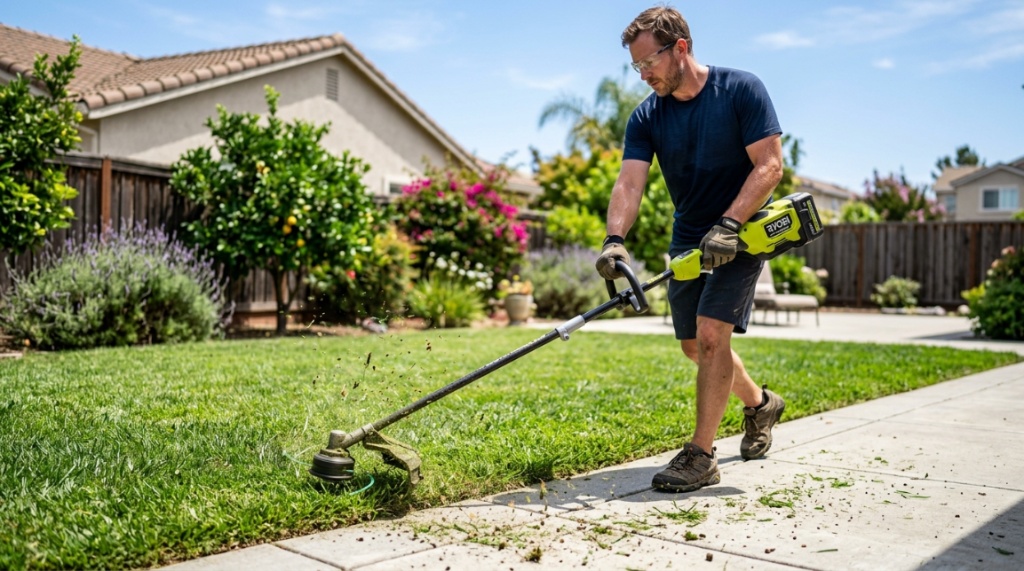
California’s landscape is as diverse as its weather. One property might demand a lightweight trimmer for a small San Diego bungalow, while another requires a heavy-duty machine to manage dry brush in the Sierra foothills. The challenge is finding a tool that delivers enough power and run time without the hassle of gas, oil, and pull cords. If you’re tired of wrestling with extension cords or smelling like exhaust after every yard session, you’re in the right place. This guide breaks down exactly how to choose the best cordless trimmer in california, covering battery technology, power output, and the trade-offs you need to weigh for your specific property.
Key Takeaways
- Battery voltage is the first indicator of power, but amp-hours (Ah) determine run time; you need to balance both for your yard size.
- Brushless motors are the standard for cordless trimmers because they deliver more torque, run cooler, and last significantly longer than brushed motors.
- Line advancement (bump-feed vs. auto-feed) is a critical usability feature that will affect how often you stop working to manually adjust the string.
- California-specific factors, such as fire season and property terrain, should influence whether you prioritize battery capacity, shaft length, or a debris shield design.
Why Go Cordless in California?
The shift toward battery-powered outdoor equipment isn’t just a trend; it’s a practical response to several California-specific realities. Gas-powered trimmers are being regulated more strictly in certain air districts, and the operational costs of fuel and maintenance add up. But the bigger, more immediate benefit is convenience. A cordless trimmer starts instantly with a squeeze of the trigger, is significantly quieter than a gas model, and eliminates the need to store and mix fuel. That quiet operation is a genuine advantage if you live in a dense neighborhood where early-morning yard work is frowned upon.
However, you can’t ignore the limitations. Battery capacity is finite. If you have a large property with heavy weeds, a single battery charge might not be enough to finish the job. This is not necessarily a deal-breaker, but it means you need to think strategically about battery size, charger speed, and whether your trimmer shares a battery platform with other tools like blowers or chainsaws. Selecting a trimmer that uses the same battery as your other equipment is one of the smartest decisions you can make for cost and storage efficiency.
Key Specifications That Matter Most
When you start comparing models, the spec sheet can feel overwhelming. But for a string trimmer, only a few numbers genuinely impact performance. Understanding these fundamentals will help you filter through the noise and focus on what counts.
Voltage: The Power Indicator
Voltage is the most immediate indicator of a trimmer’s cutting capability. In the cordless market, you will typically see 20V, 40V, 60V, and even 80V systems. For light residential trimming of normal grass around fences and flower beds, a 20V or 40V model is generally sufficient. But if you have thick weeds, blackberries, or tall dry grass, a higher voltage platform (60V and above) will provide the sustained torque needed to power through without stalling.
It’s important to understand that voltage is not the whole story. A 40V trimmer with a high amperage battery may cut more efficiently than a 60V trimmer with a weak, low-capacity battery. The motor and the battery work together, so you should evaluate the system as a whole rather than looking at one number in isolation, To keep your outdoor space looking pristine all season long, learn how to Create Attractive Borders in Your Garden alongside your regular trimming routine.
Brushless vs. Brushed Motors
This is arguably the most important technology decision you will make. Brushed motors are cheaper to produce, which lowers the price of the trimmer. However, they use carbon brushes that wear down over time, and they generate more heat and lose efficiency as the battery drains. Brushless motors use electronic controllers instead of brushes, which delivers several distinct benefits: they are more efficient with battery power, they produce more torque for their size, and they have a longer operational lifespan.
For a tool you will use for years, spending a little extra on a brushless motor is almost always worth it. The efficiency gain directly translates to longer run times and the ability to cut thicker material without bogging down. If you are dealing with a large, difficult yard, do not compromise on this feature.
Evaluating Battery Capacity and Runtime
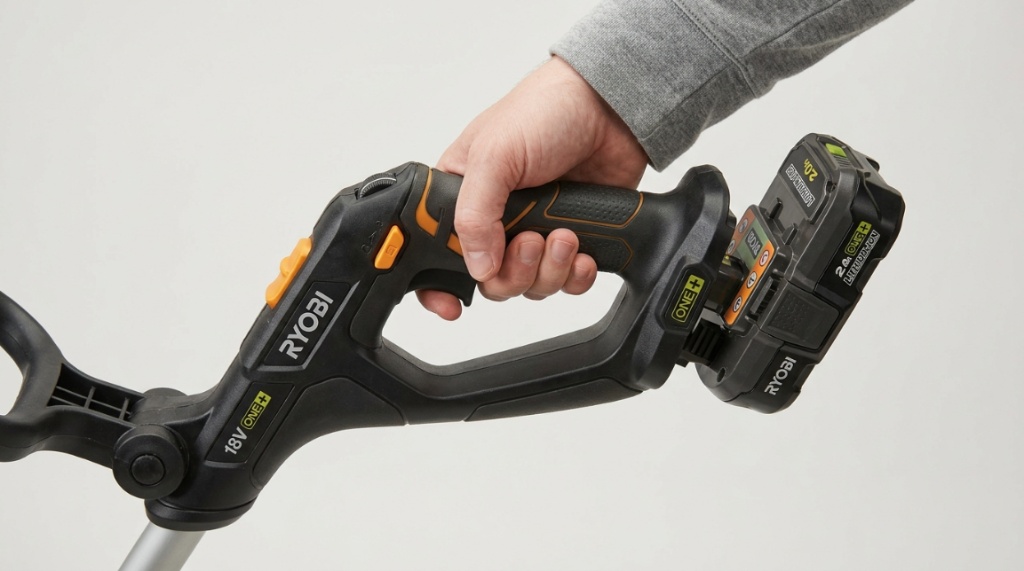
Battery capacity is measured in amp-hours (Ah). This is the “fuel tank” of your trimmer. A higher Ah rating means the battery will run longer before it needs a recharge. A 2.5Ah battery on a 40V system is equivalent to roughly 100 watt-hours of power. A 5.0Ah battery on the same system doubles that energy reserve.
Be realistic about your yard size. For a standard suburban lot, a 2.0Ah to 4.0Ah battery usually provides enough time to complete the trimming. For larger properties, you should consider buying a trimmer that comes with two batteries and a fast charger. Running a 6.0Ah battery to empty and waiting 60 minutes to recharge is a poor experience. Look for chargers that can replenish the battery in 30–45 minutes, or simply rely on having a spare battery that can be swapped out when the first one dies.
It is also worth noting that battery degradation occurs over time. A battery loses capacity as it ages, so a system that barely handles your yard today might not have enough juice in two years. Buying into a platform with a slightly higher capacity battery than you think you need provides a bufffer for natural battery wear.
Cutting Mechanism and Line Management
The cutting head is where the rubber meets the road. There are several configurations, and your preference will depend on your patience and the type of vegetation you are cutting.
Bump Feed vs. Auto-Feed Heads
Bump-feed heads require you to tap the bottom of the trimmer on the ground while running at speed to release more line. It is a reliable system but requires a deliberate action. Auto-feed systems release line automatically when the motor detects a reduction in speed or load. This is incredibly convenient because you rarely need to stop working. The downside is that auto-feed systems can sometimes feed too much line, which then gets snapped off quickly or struggles to cut effectively.
For heavy-duty work, a bump-feed head is often preferred because it gives the user more control. For routine weekly trimming, the auto-feed is a time-saver. Consider your tolerance for this type of maintenance when choosing a model.
Line Thickness
Thicker line (0.080 inches and above) is more effective at cutting down thick weeds and woody stems. Thinner line (0.065 inches) is fine for light grass but will break frequently on tougher material. Ensure the trimmer you choose is compatible with the thicker line gauge, especially if you have a rough yard.
Straight Shaft vs. Curved Shaft
Straight shafts are more common on professional or heavy-duty models. They allow you to reach further under bushes and fences and typically offer a more upright posture, which reduces fatigue. Curved shafts place less strain on the lower back and are easier to control for smaller users, but they are generally paired with less powerful motors and are suited for lighter tasks.
Handling Brush: When a Trimmer Isn’t Enough
If your property borders open land or contains areas that only get mowed a few times a year, a standard head with trimmer line will struggle. In these cases, look for a trimmer that offers an interchangeable head or blade attachment system. Some cordless platforms allow you to swap the string head for a metal brush-cutter blade. This is a game-changer for clearing saplings, thick chaparral, and invasive weeds. The ability to use a blade expands the usability of the tool dramatically and can save you the cost of renting a separate brush cutter.
Just be aware that using a blade requires significantly more battery power. Ensure your battery is adequate, or you will be back at the charger within fifteen minutes of intense cutting.
Budget Considerations and Value
Prices for cordless trimmers range from around $100 for basic entry-level models to over $400 for high-end kits with multiple batteries and rapid chargers. The entry-level units often use brushed motors and have smaller batteries, making them suitable only for very small yards with normal grass. The performance drop-off when moving from a budget model to a mid-range model is substantial.
When setting a budget, factor in the cost of the batteries and charger. A trimmer “bare tool” might look inexpensive, but you won’t be able to use it without buying batteries, which can double the overall cost. Look for kits that include what you need out of the box. Your goal should be value, not the lowest initial price. A slightly more expensive system that cuts efficiently and finishes the job in 40 minutes without overheating is better than a cheaper one that takes two hours due to multiple slowdowns and line breaks.
Frequently Asked Questions
What voltage cordless trimmer do I need?
For standard residential lawns with normal grass and weeds, a 40V system is a good minimum target. It offers sufficient power for typical edge trimming and light weeding. If you have thick vegetation, tall dry grass, or a large property, move to a 60V or 80V system for the extra torque and durability.
Can I use my cordless trimmer in rainy conditions?
Most modern cordless trimmers are water-resistant but not waterproof. You can safely use them when the grass is wet, but you should avoid operating them in heavy rain or submerging the head in water. Wet grass does also cause the line to break more frequently and can clog the debris shield.
Is it worth buying two batteries instead of one?
Yes, having two batteries is the best way to avoid downtime. While one battery is running the trimmer, the other can be charging. This allows you to work continuously if needed, mitigating the primary limitation of cordless tools compared to gas.
How do I store the lithium-ion batteries?
Store batteries in a cool, dry place away from direct sunlight. Lithium-ion batteries degrade faster when stored at high temperatures or at 100% charge for long periods. If you are storing the trimmer for the winter, aim to keep the battery at around 50-60% capacity.
Can cordless trimmers cut through thick weeds?
Yes, but only if the motor has enough torque and you are using the right line. A brushless motor model with a blade attachment will handle thick weeds and small brush. If you are using string only, make sure the line is thick and the motor is powerful enough to avoid stalling.
Conclusion
Choosing the right cordless trimmer in California comes down to matching the tool to the terrain. It’s not just about grabbing the most powerful model on the shelf. Start by assessing your yard size and vegetation type. If you are in a suburban area with a small to medium lawn, a mid-range 40V brushless model with an auto-feed head will likely serve you perfectly. If you are managing a larger property, prioritize a high-voltage system with a brushless motor, a bump-feed head for control, and the ability to attach a blade for heavier brush. Investing in a reliable battery platform is just as important as the trimmer itself, as it opens the door to a whole ecosystem of cordless tools. Take your time, read the specifications carefully, and purchase a system that you can grow into and rely on for years to come.

