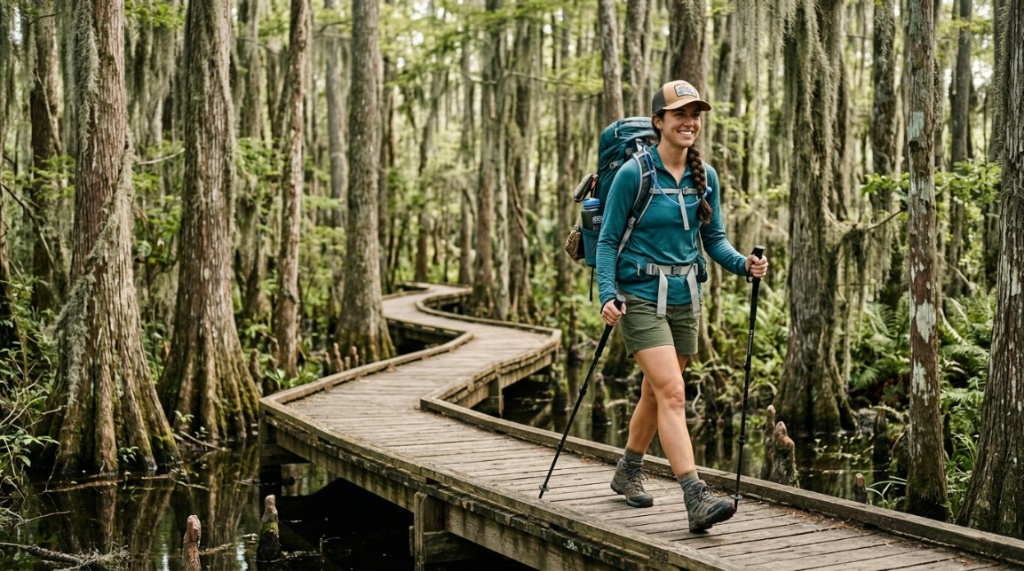
You’ve planned the perfect weekend escape to the Everglades or a breezy island camping trip along the Gulf Coast. Your gear is piled on the bed, and then it hits you: the old, oversized backpack you borrowed from your brother just isn’t going to cut it. It sits too low on your hips, the shoulder straps dig in, and you know you’ll be miserable by mile two. Finding the right camping backpack for women in florida isn’t just about aesthetics—it’s about surviving the humidity, managing the heat, and ensuring your load sits comfortably on a frame built for a female physique.
This guide breaks down exactly what to look for, how to avoid common mistakes, and why the Florida climate changes the rules versus shopping for alpine gear. We’ll move beyond generic advice and focus on the functional details that matter most for the Sunshine State’s unique terrain.
Key Takeaways
- Ventilation is non-negotiable: Florida’s humidity requires a suspended mesh back panel to keep sweat off your spine, not just a “breathable” label.
- Fit trumps volume: A pack that fits your specific torso length (14–17 inches) is more important than raw liter capacity; a poor fit causes pain and instability.
- Prioritize lightweight materials: Avoid heavy canvas or waxed packs; seek out ripstop nylon to reduce sweating and fatigue in warm weather.
- Consider “transitional” storage: You need access to rain gear and hydration quickly—not just top-loading access—to handle pop-up storms and high heat.
The Crucial Difference: Why Florida Camping Packs Differ
Most backpack guides are written for hikers heading to Colorado or the Appalachian Trail, where keeping warm is a priority. Florida is the exact opposite. The climate demands a pack that works with the heat, not against it. The primary mistake we see is women buying a heavier pack for “support” that ends up causing them to overheat before they even reach the trailhead.
When selecting a camping backpack for women in florida, you are optimizing for airflow and weight reduction. Heavy loads are harder to carry in high temperatures because your body works overtime to cool itself down. Furthermore, the terrain here is largely flat—you are rarely climbing steep elevation gains—so you do not need the rigid, heavy suspension systems designed for mountaineering. Instead, you need a pack that moves with you while keeping the load as close to your back as possible without trapping heat.
The Torso Fit: It’s Not About Your Height
Many women make the mistake of choosing a pack based on their height. This is a critical error. A tall woman can have a short torso, and a petite woman can have a long torso. The measurement that matters is the distance between your C7 vertebra (the bony bump at the base of your neck) and your iliac crest (the top of your hip bones).
For a proper men’s vs. women’s comparison, understand that women’s packs are not just smaller versions. They feature:
- Curved shoulder straps designed to avoid rubbing on the chest.
- A lower, more angled hip belt that cups the hips rather than sitting on the waist.
- Shorter torso lengths (usually small/medium ranging from 14” to 17”).
If the pack doesn’t fit your torso, the hip belt will fail to transfer weight to your legs, forcing your shoulders to carry the burden. This leads to fatigue, neck pain, and a ruined trip,Before hitting the trail, make sure you are fully prepared by reviewing these essential Camping tips for novice campers.
Ventilation Strategy: The “Trampoline” Back Panel
In Florida, if your back is pressed against a solid pack wall, you will be drenched within thirty minutes. The heat index here frequently exceeds 95°F, making sweat management a top priority. You need a pack with a suspended mesh back panel—often called a “trampoline” back system. This creates an air gap between your back and the pack frame, allowing heat to escape.
Look for terms like “AirSpeed,” “AirScape,” or “Ventilation Mesh” in product descriptions. These designs curve the load away from your spine, which slightly increases the pack’s center of gravity but is a necessary trade-off for comfort in high humidity. Do not use a tactical or military-style pack for recreational camping here unless you enjoy having a lake form under your shirt.
Hydration and Heat Management
You will drink more water in two hours in Florida than you would in an entire day in the mountains. Your pack needs a dedicated hydration sleeve. However, a common oversight is placing the bladder directly against your back, which transfers the cold water to your skin—sounds great—but then the heat from your body warms the hose, giving you lukewarm water quickly.
Pair your pack with a hose insulation kit, or look for packs that route the hydration tube outside the shoulder strap rather than under it. This minimizes heat transfer. Additionally, ensure the pack has stretch side pockets. Florida’s sudden afternoon thunderstorms mean you need to grab a water bottle quickly without stopping—having a reachable side pocket is a safety feature, not just a convenience.
Understanding Liter Capacity: How Much Do You Actually Need?
Capacity is measured in liters, but the “right” number depends on your trip length and whether you are carrying water filters or ultralight gear. Most guides will tell you 50L is a good baseline, but in Florida, you should lean toward the lower end of your comfort range unless you are carrying cold-weather gear (which you won’t be).
| Trip Type | Recommended Capacity | Key Gear Considerations |
|---|---|---|
| Day Trip / Beach Camp | 20–30 L | Light layers, bug spray, food, and 2L of water. |
| Overnight (1–2 Nights) | 35–45 L | Tent (if sharing), sleeping bag (compressed), stove, and rain gear. |
| Weekend / Extended (3+ Nights) | 45–55 L | More food, extra water capacity (3L), and bulkier sleeping pad. |
In Florida, you rarely need a 70+ liter pack unless you are carrying all the gear for a family group. A smaller pack forces you to pack lighter, which translates to less sweat and more energy for enjoying the springs or the coast.
The “Water Weight” Problem
Unlike mountain camping where streams are plentiful, many Florida campsites (especially in the Keys or coastal barrier islands) have no potable water. You may need to carry several liters of water with you, which is incredibly heavy (1 liter = 2.2 lbs).
If you are planning a beach camping trip where you must walk 3 miles with 6 liters of water, you need to heavily consider a pack with a great suspension system. While we advocate for lighter packs, you cannot compromise on the frame if you are hauling water weight. Look for a pack with an internal frame (usually aluminum or high-density plastic) that transfers this massive load to your hips.
Load Lifting and Stabilizer Straps: The Hidden Comfort Features
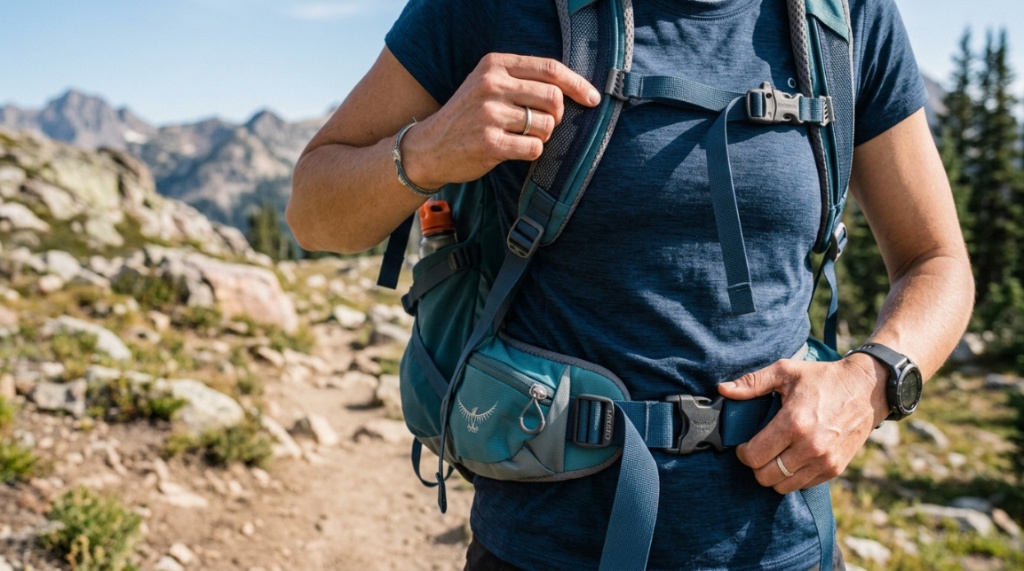
Look at the top of the shoulder straps. Do you see small webbing straps that clip to the top of the pack? These are load-lifter straps. They pull the top of the pack toward your body, keeping the weight centered over your hips. This is crucial for Florida-trail-walking, where you might be shifting your weight side-to-side over uneven roots or sandy sections.
Additionally, check the sternum strap. It should be vertically adjustable to sit comfortably below your collarbone, preventing the shoulder straps from slipping off. Compression straps on the sides are also vital. They squeeze the load down, making the pack narrower and more stable—perfect for navigating through tight palmetto scrub or breezy beaches.
Avoid the “Donald Duck” Waddle
Have you ever seen a backpack hanging so low it forces the hiker to lean forward? That’s a fit failure. The hip belt should sit fully over your hip bones, not around your belly button. When you tighten the belt, you should feel the weight “lift” off your shoulders.
To achieve this, you often need to adjust the shoulder straps at the top of the pack. There are usually adjustment straps located just under the armpit on the side of the pack. If these are too loose, the pack hangs too low. Too tight, and it pulls the hip belt up. Spend ten minutes adjusting these properly before you hit the trail—it makes a world of difference.
Feature Selection: What Works vs. What Is Gimmicky
Brands love to add bells and whistles, but not all are useful for Florida camping. Here is how to separate the essential from the unnecessary:
- Great: Daisy chains (webbing loops on the outside) for clipping on a drying towel or wet shoes to air-dry in the sun.
- Great: A removable daypack or summit pack. Useful for setting up base camp and taking a lighter bag to the beach.
- Skip: Heavy leather bottoms (weight and heat retention).
- Skip: Sleeping bag compartments with heavy zippers if you use a compression sack anyway—the zipper adds weight and can pinch.
- Great: A padded hip belt pocket large enough to hold a phone. In Florida, you’ll be taking photos of wildlife and need quick access to your phone for maps without stopping.
The Rain Cover Debate
Florida gets about 50+ inches of rain a year, but it usually comes in short, violent bursts. Many packs come with a built-in rain cover tucked in a bottom pocket. While useful for prolonged downpours, the cover also traps heat and can make your pack slippery to carry.
A better strategy is to use a pack with water-resistant fabric (like a DWR-treated ripstop nylon) and keep your critical items (electronics, sleeping clothes) in dry bags inside the pack. This saves weight and prevents the “sweat tent” effect of a vinyl cover.
Weight: The Ultralight Trend vs. Comfort
Ultralight packs (weighing under 2 pounds) are trendy, but they often lack the frame needed for heavy water carries. In contrast, a heavy expedition pack (6+ pounds) is overkill. Aim for a “lightweight” pack in the 3 to 4.5-pound range. This provides enough structure for a 25-30 pound load without weighing you down.
Look at the fabric denier (D) rating. While 400D fabric sounds durable, it’s heavier. For Florida, a 100D to 210D fabric is usually sufficient, as you are not brushing against sharp granite rocks. The primary wear-and-tear here is sand and salt, which can corrode zippers. Look for YKK zippers (a reputable brand) that are coated, and ensure the zippers have weatherproofing flaps.
Where to Focus Your Budget
You don’t need to spend $400 to get a great pack, but you shouldn’t buy the cheapest option at a big-box store either. Focus your budget on the two contact points: the hip belt and the shoulder straps. These are the parts that touch your body, and quality cushioning here is non-negotiable.
A pack with a great harness on a mediocre frame is far more comfortable than a stiff frame with thin straps. Brands like Osprey, Deuter, and Gregory have excellent women’s specific fits that are widely available and well-reviewed. When you look at a selection of top-rated gear, you’ll notice these brands dominate the camping backpack for women in florida category due to their specific ventilation and fit technologies.
Frequently Asked Questions
Can I use a hiking backpack for beach camping?
Yes, but ensure it has a high main compartment entry point and is resistant to sand. You must also be diligent about keeping zippers clean, as sand and salt can cause them to stick. Rinse the pack with fresh water after any beach trip.
How do I measure my torso length for a backpack?
Tilt your head forward and find the bony bump at the base of your neck (C7). Place your hands on your hips so your thumbs point backward to find the top of your hip bones. Measure the distance between these two points. That is your torso length. Use the manufacturer’s size chart to select the correct pack size.
Is a framed backpack necessary for casual camping trips?
For trips longer than a day or carrying more than 15 pounds, yes. An internal frame transfers weight to your hips more efficiently than a frameless pack, which keeps the load on your shoulders. This is particularly important for Florida’s warm weather, where hunched posture restricts lung capacity.
How many liters do I need for a 3-day summer trip in Florida?
For summer, you need less bulk because you don’t need heavy insulation. A 40-45 liter pack is usually sufficient for a 3-day trip if you pack smartly, carry a lightweight sleeping bag, and share the tent with a partner. Keep the weight under 15% of your body weight.
Conclusion
Choosing the right pack for Florida camping is a balancing act between ventilation, weight, and structural support. It is not about buying the biggest bag you can find; it is about buying the best-fitting one. Prioritize a pack with a suspended mesh back panel, a properly sized hip belt, and lightweight fabric.
Take your time adjusting the load lifters and sternum strap before you leave the house. A well-adjusted pack should feel like it locks onto your hips, leaving your shoulders free and your back relatively cool. With the right setup, you’ll spend less time adjusting straps on the trail and more time enjoying the sawgrass, springs, and swaying palms.
Before you commit, load the pack with your actual gear and walk around your house for 15 minutes. If it feels heavy or rubs anywhere, try a different size or brand. Your future self will thank you on the next long stretch to the campsite.