
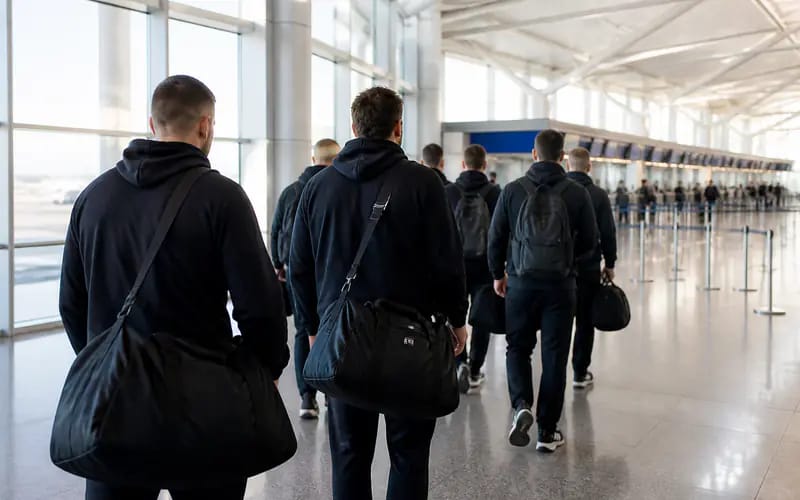
Don’t let the travel arrangements ruin your club’s touring plans before you’ve even looked at fixing up the club’s matches and training grounds. These will form the basis of your club’s touring trip and need to be organised well in advance of your proposed departure date.
Flying Or Going By Coach
While flying is likely to be quicker and, once compared accurately, less expensive than crossing France by coach and continuing to Spain by road, it’s not always the preferred option. Coaches can be booked for tours to travel as a single party and, once a vehicle has been booked, remaining members of the team can travel free. This is often the best option for very large squads with very limited budgets. However, once the option of flying has been ruled out, then flights need to be booked and travel to and from the airport sorted.
Choosing The Right Airport
Many airports can be used as arrival points (Girona, Barcelona, Alicante, and Madrid). However, transfer times from these airports vary greatly depending on the location of your Rugby Club’s accommodation. Costa Brava clubs are best flying into Girona Airport (1 hour or less transfer time in a coach). Costa Blanca clubs are best flying into Alicante Airport (approximately 1 hour transfer time in a coach). Clubs touring inland Spain (based around a Rugby Club with training pitches etc.) would be best flying into Madrid Airport. Transfer times from airports to your club’s accommodation can vary greatly depending on how many clubs are staying at the same accommodation.
Booking Group Flights Properly
Group bookings can often come with their own set of conditions, and often there will be a block booking date after which individual names cannot be added and passengers will have to purchase the flight at the higher individual price. Often airlines will also require the full names of all passengers to match their passports at the time of booking and can charge high amendment fees (often over £50 per person) to change names or travel dates. It is also worth checking with governing bodies such as World Rugby for your particular sport for official guidelines on touring parties.
Passport And Document Checks
In planning your travel to Spain, for your rugby tour, every member of your club and your coaches and managers will require a valid passport for the entire duration of your trip. Nationals of non-EU countries, such as the UK, will require their passports to be valid for at least three months after your return to the UK. You should also bring a Ghic card to ensure that you have adequate health care insurance whilst in Spain. We recommend that all players’ and staff’s passports are renewed in plenty of time before your trip. This allows for any unavoidable delays in receiving your new passport. Tour managers would also appreciate a copy of every person’s travel documents. See also Rugby Tours To Spain. There is published guidance on official rugby union guidance that covers this in more detail.
Sorting Transfers On Arrival
An efficient flight into Spain does little good if a long coach journey to your club’s first training session or match is left to chance. Plan your club’s travel from the moment that your first training session starts. Assume that your team will arrive at the airport in good time to check-in for their flight. Allow sufficient time for players to clear airport formalities, to collect their baggage and to travel to your club’s training venue in good time for the start of training. Booking a private transfer from the airport to your club’s training venue will help to alleviate a number of potential problems, including the risk of late arrival and the need to make alternative travel arrangements for large numbers of players and staff.
Getting Kit Through The Airport
A long list of items will need to be packed in to the tackle bags and scrum machines. In most airports hold baggage is limited to one bag per person, and usually within a weight allowance (20kg-23kg) for which there is an excess charge for any extra weight above this. So team equipment is best booked as an extra allowance in advance rather than risk high excess charges on the day. The tour’s medic should take any required medical equipment and prescribed player’s medication as hand luggage. Most importantly, the touring team must ensure that they have with them all necessary equipment to deal with any injury or player welfare issue in line with World Rugby guidelines for medical provision.
Building In A Time Buffer
A lot of things can go wrong on the day of your flights, such as delays or a missed connection, so it’s best to add a lot of slack to the first day of your tour. This day should be organised in such a way that if something does go wrong, it won’t cause too much of a problem. This also applies to the flight itself: if there is only one flight a day, try to book a return on a later flight. Check the UK government’s travel advice for Spain before you travel. Although this contains information on conditions of entry etc. applicable to all travelling to Spain, there may be information relevant to specific regions you will be visiting.
If you get the travel, transfers, passports and baggage allowances sorted out in good time then the first day’s training should start on time.


